
A technically correct DJ set and a memorable DJ set are not the same thing .A technically correct set has keys that mix harmonically, BPMs that transition smoothly, energy that doesn't spike or drop unexpectedly.
It's okay, competent; people dance, no one complains. However, a memorable set does all of those things and it also takes the room on a journey with a destination. There's a beginning, a development, and a peak that felt like it was built toward rather than arrived at accidentally. People don't just dance, they feel something and they remember it. The difference is narrative; one set is just a playlist, the other is a story. Here's how to build the second kind.
Why Most Sets Don't Have a Story
Most DJs build sets the same way: they start with something that fits the moment, play what seems to work next, and react to what the room is doing. This is responsive DJing and it's a genuine skill. But reactive decision-making in the moment produces a different result than intentional construction beforehand. Sets built purely in the moment (meaning, track-to-track DJing) tend to plateau.
The DJ finds an energy level that the room responds to and stays there. The floor stays full. The BPM barely moves. Forty minutes in, it's still good — but it's the same good it was twenty minutes ago .The DJs whose sets people talk about afterward are usually not the ones who reacted most skillfully. They're the ones who lead the crowd in waves of energy — who knew roughly where they were going before they started and made decisions in service of that destination. This is the difference between a playlist and a story.
Storytelling In DJ Sets and Chapter DJing
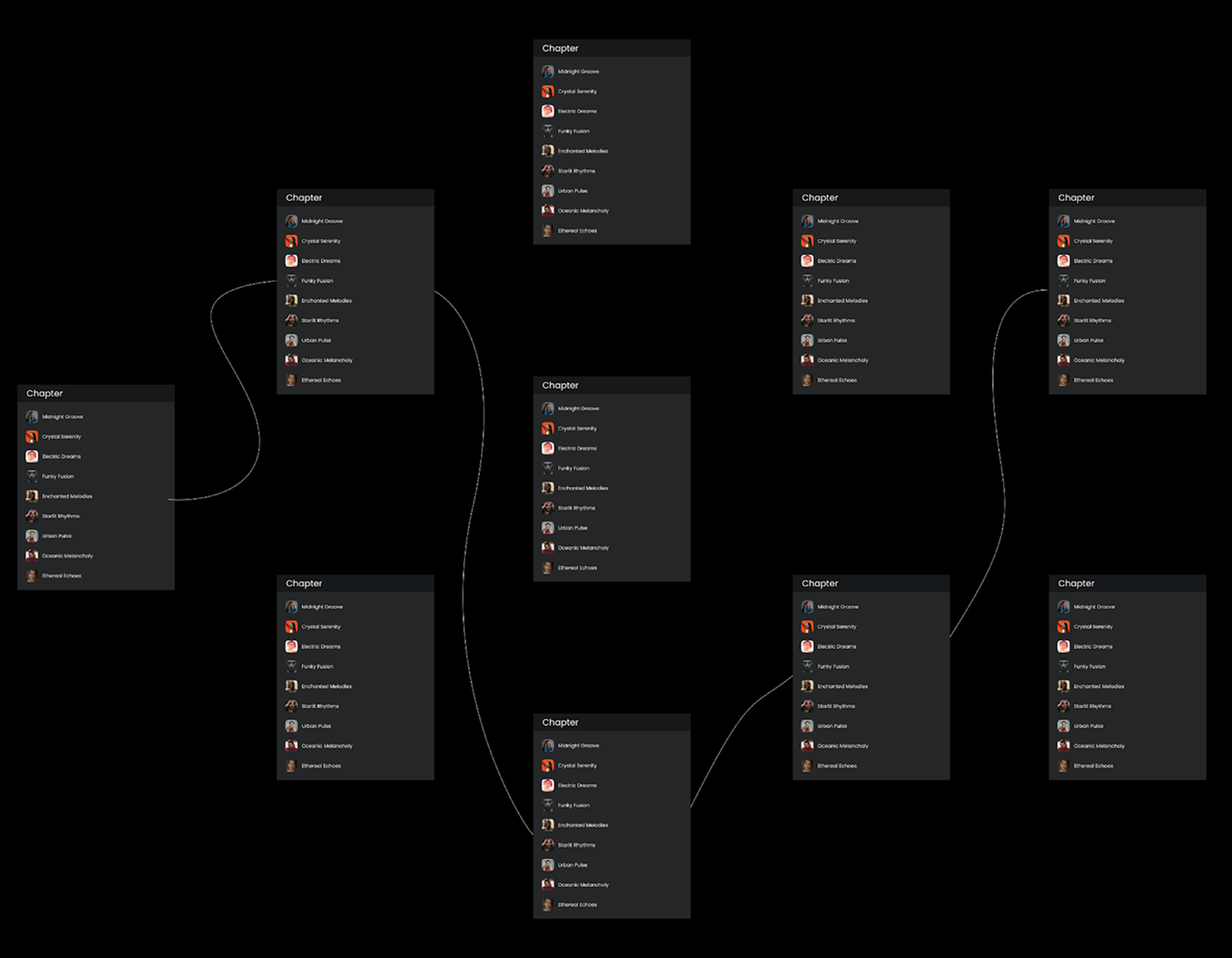
Storytelling in a DJ set is not about following a single predetermined arc from start to finish, but rather about building your performance from modular units called chapters.
If you have never heard of chapters in the DJing context, you should now that a chapter is a small collection of three to seven tracks that share a cohesive vibe, whether through similar energy, sound design, emotional quality, or dynamic range, and these tracks work together naturally as a block without needing to be identical.
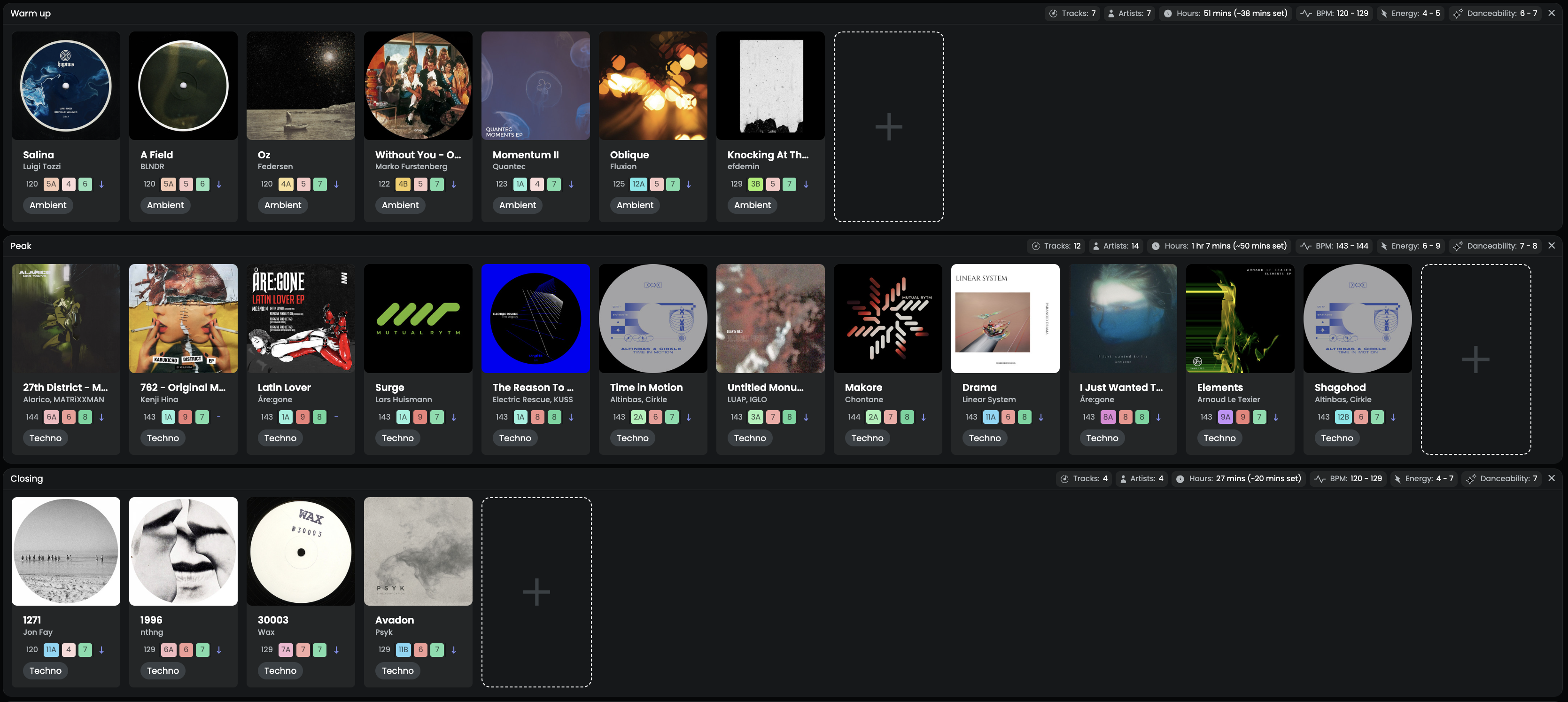
The goal of chapter DJing is to give your set a narrative structure without locking you into a rigid playlist. Instead, you organize your music library into a chapter based structure so that when you perform, you are asking yourself what the next chapter, or energy shift/ direction, should be rather than scrambling for just the next track.
This keeps you flexible: if the dance floor suddenly fills up and demands higher energy, you can skip to a completely different chapter that matches the moment and pivot instantly. You are never just hitting play, but you are also never panicking between tracks. The result is a sequential narrative where each chapter fulfills a specific goal, and the overall set becomes a journey rather than a static line of music.
The graphic best exemplifies how chapter by chapter Djing would work:
A General Structure of a Story-driven DJ Set
Below you can find an example of a general stucture a story-driven, chapter based DJ set, can follow if you are a beginner DJ:
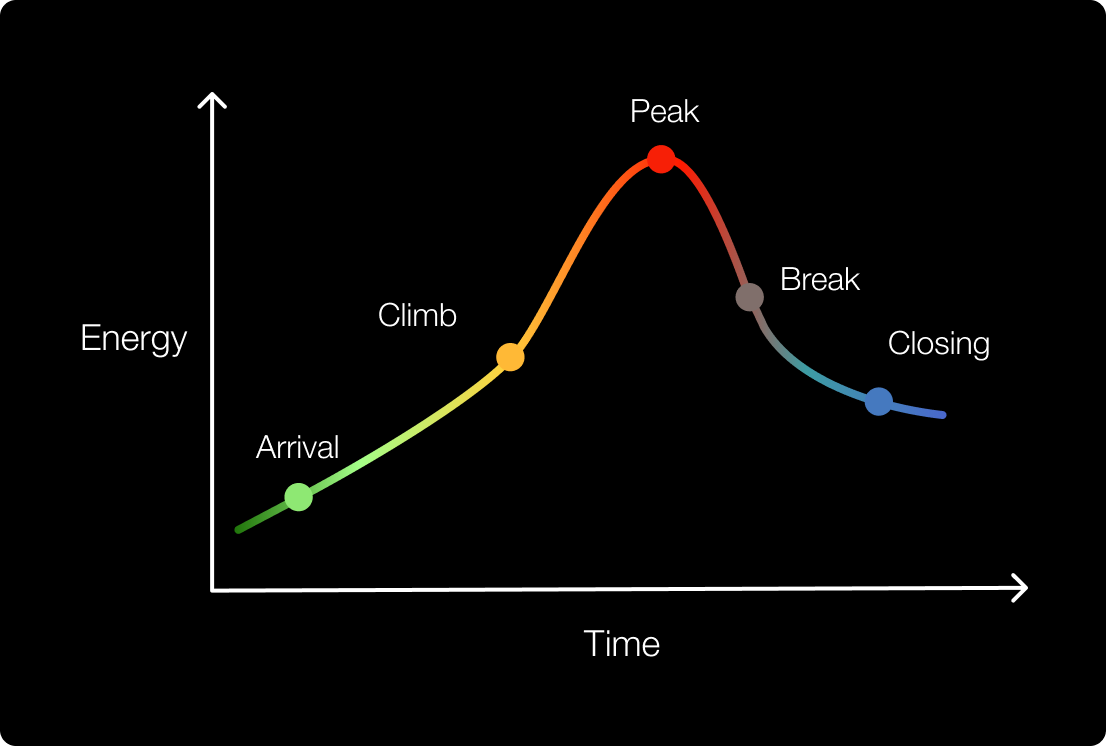
Chapter 1: Arrival (roughly the first 25% of the set):
The room is not ready yet, people are arriving and the energy is low. Your job in Act 1 is not to peak — it's to establish a world. What kind of night is this? What temperature? What weight? The tracks you choose in Act 1 set the emotional contract with the room: this is the tone we're going to explore tonight.
Chapter 2: Climb(roughly the middle 50%):
This is where most of the work happens. This stage builds in energy, develops motifs, and creates the tension that makes the Peak meaningful. This is not a straight line up — it moves, dips, surprises. A track that drops back in energy briefly makes the next build hit harder. A track that goes sideways stylistically creates a release that makes the return feel earned.
Chapter 3: The Peak ( near the end 75%):
Here is where you redeem every promise and build up you created in previous stages. Here is where you'll find the highest energy tracks of your entire DJ set.
Act 4: Resolution ( that last 15%):
After the peak bringing the energy down with intention, without disengaging the audience. The best closing tracks are often slow, warm, and somehow surprising — they send people home with a feeling rather than a tempo.
Here's an example of what this look likes in terms of time and energy:
If you are interested in learning more about the hidden structure of great DJ sets, you can read this article.
Conclusion
A story driven set does not happen by accident. You have to think beyond single tracks and plan with direction, in which chapter DJing can help you build the most cohesive journey. Chapter DJing keeps you flexible because you are not locked into a rigid plan, but you are also not hunting for the next track like a maniac.
Have you tried Djoid's Chapter Builder Yet?
Djoid's Chapter Builder lets you easily filter find, and organise tracks in a chapter structure, and export straight to your mixing software of preference.