Let’s be honest, nowadays anyone can sync two tracks.
The technical barrier to entry for DJing has almost vanished. While more people have access to the decks than ever before, a wide gap remains between technical proficiency and musical mastery.
It is the difference between someone who just matches BPMs and someone who guides a room through a curated sonic journey.
But, everyone has to start somewhere. No one is a master at anything when they just get started; it takes time, effort, and dedication.
Like in every other discipline, DJs follows a natural path of development, a process of moving from just instinct to a refined, systematic creative identity.
The difference between a hobbyist and a master isn't their gear; it’s their system. It’s the mental and organizational framework they use to turn a pile of digital files into a narrative.
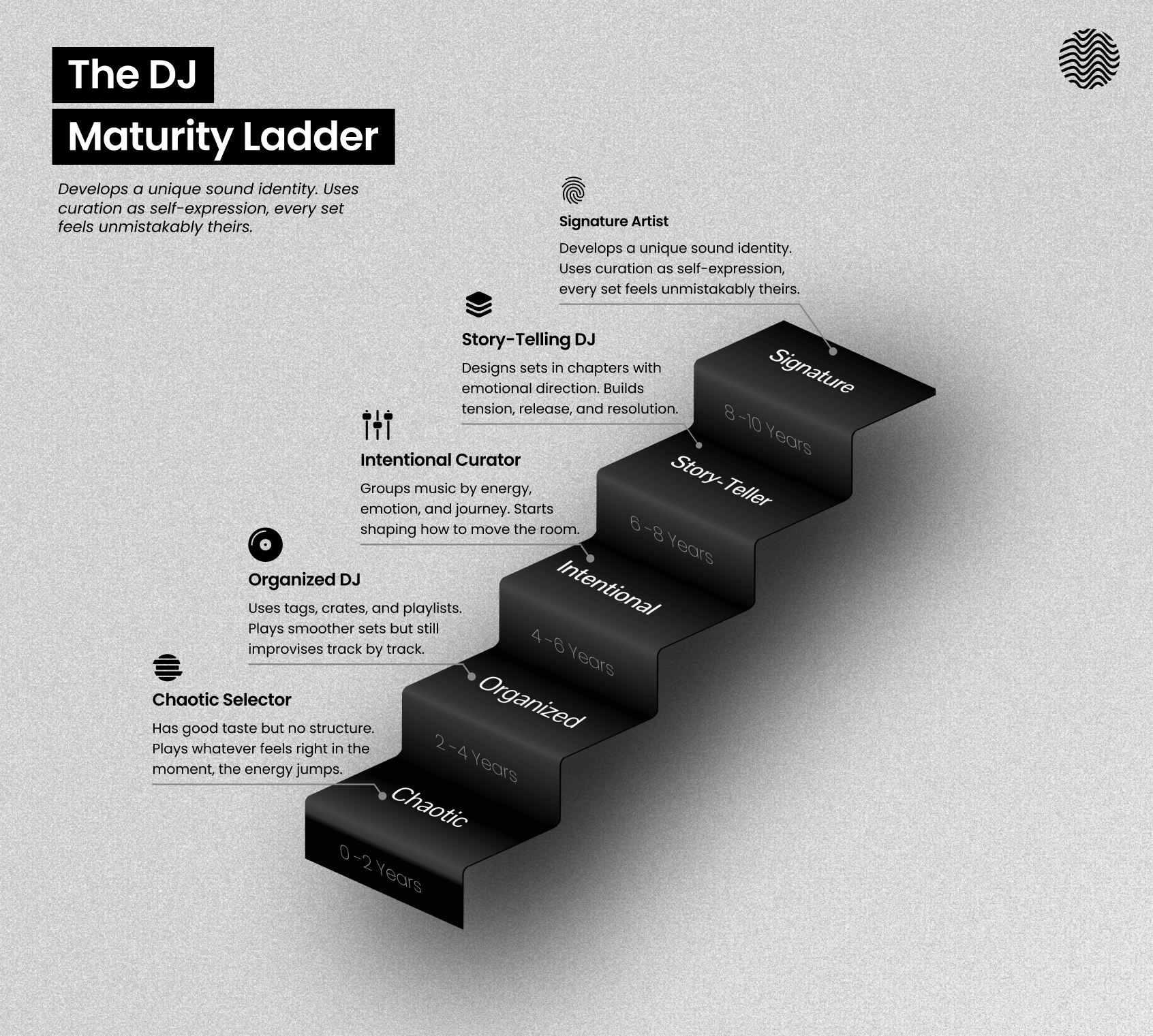
This evolution follows a very specific path— The DJ Maturity Ladder. It usually takes around decade to reach the top. You might spend longer in some stages than others, but it takes a long time nonetheless.
Take a look at the DJ Maturity Ladder below, and not only find where you stand, but what you could work on to move forward.
Steps in the DJ Maturity Ladder:
1. The Chaotic Selector:
Timeline: Years 0–2
The Reality: You are addicted to the 'New' folder.
At this stage, you’re just getting started. You get music because it sounds cool in your headphones. Your library is a most likely messy; mismatched bitrates, missing metadata, and folders labeled "Stuff to Play Saturday."
You’re playing by pure instinct. Sometimes it works brilliantly by accident; other times, you kill the floor because you don't understand energy levels yet. You’re building your taste, which is the most important thing you have, but you have zero control over it. You’re a selector, but you aren't a director (yet!)
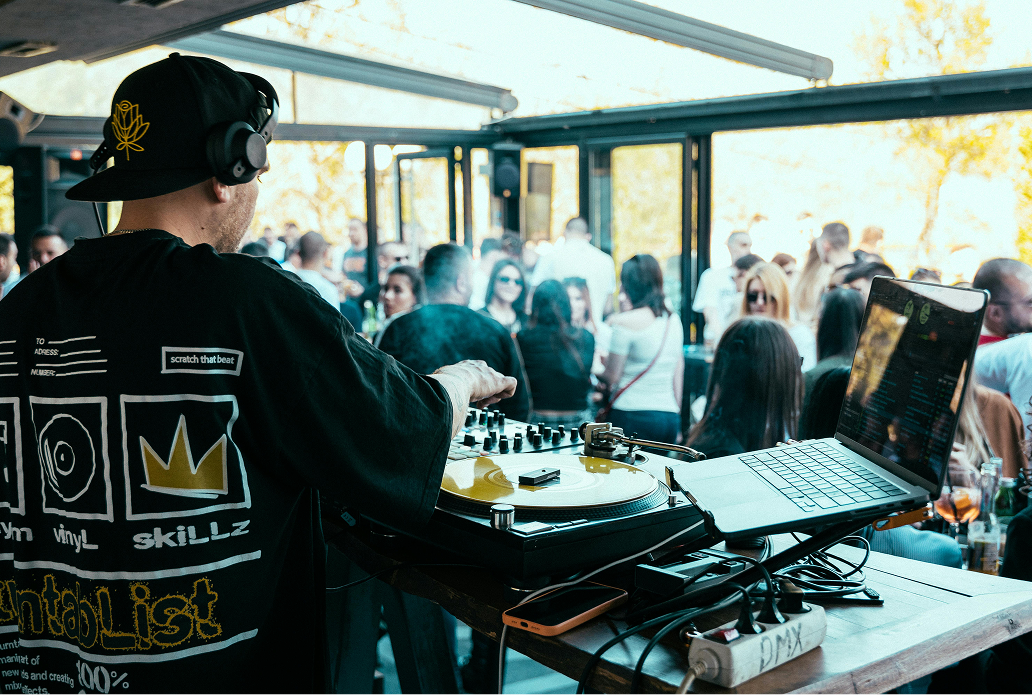
2. The Organized DJ:
Timeline: Years 2–4
The Reality: You’re tired of the "where is that song?" panic.
Around year three, the "Chaotic Selector" lifestyle starts to fail you. You’ve missed too many opportunities for a perfect mix because you couldn't find the track in time. So, you pivot. You become obsessed with folders, tags, and Star Ratings.
You now understand better how tracks relate to each other technically, like BPM, Key, Genre, Vibe, and have a better idea of what your sound as an artist is. Your sets become smoother and more professional. Most mistakes disappear, but you might find yourself playing it a bit too safe because you’re constrained by what tracks you can find and end up using.
3. The Intentional Curator:
Timeline: Years 4–6
The Reality: You stop playing just playing tracks, and become an intentional selector.
This is a major turning point. You stop looking at a track as "a Tech House song" and start seeing it as "a high-tension tool for 2:00 AM."
You begin to understand that curation is about context. As an Intentional Curator, you realize that the exact same song can be a peak time anthem or a total mood killer depending on what you played before it. You start designing the mood of the night. You’re no longer just trying to keep people dancing; you’re trying to control how they feel, tension, release, euphoria, or grit.

4. The Storytelling Artist: The Narrative Phase
Timeline: Years 6–8
The Reality: You think in Chapters, not tracks.
By now, you’ve stopped reacting to the crowd and started leading them. You understand that a great 3-hour set is like a movie—it needs an inciting incident, a build-up, a climax, and a resolution. You might play three tracks that share a specific atmospheric texture to create a "chapter" of deep, hypnotic energy before pivoting to something brighter. You’ve moved beyond mixing into composition.
When you’re at this level, people don't just stay for a song; they stay for the whole set.
5. The Signature Artist: The Identity Phase
Timeline: Years 8–10+
The Reality: People hire you for your sound, not just a DJ.
This is the top of the ladder. After a decade of trial and error, you’ve distilled everything down into a Sound Identity. You don't sound like your influences anymore; you sound like you.
A Signature Artist has a proprietary system; a specific way of prepping, a specific way of tagging, and a specific "ear" for tracks that others might overlook. You aren't checking the charts to see what’s popular; you’re digging for what fits your "language." You have reached artistic maturity.
Scaling the ladder with Djoid
The reality of the ten-year climb is that most of those years aren’t spent mastering music, they are spent fighting the friction of your own library.
Traditional software was designed to be a digital filing cabinet, not a creative environment. It keeps you stuck because it forces you to think like a librarian, always focusing on where a file is, rather than what it is, and how you can use it.
Here are our tips on how what you should do to help you climb the ladder, with or without Djoid.
1) Break the Folder Trap
For the Chaotic Selector and beyond the Organized DJ, the first issue you have to overcome is lack of organization.
There are hundreds of tutorials on how you can organize your music to DJ. But, even if you follow someone elses or your own system, it will always become its own problem since folders are inherently a RIGID system.
This manual organization is a treadmill; you spend more time moving files than you do listening to them. The other limitation of a folder-based system is that it’s binary, if a track is in your House folder, it effectively disappears from your Techno brain. And if it is in both folers, you'll have so many duplicates. This just escales with the more tracks you accumulate.
Folders keeps your library fragmented and your creative identity shallow, if you are not tending to your music consistently.
If you already have Djoid:
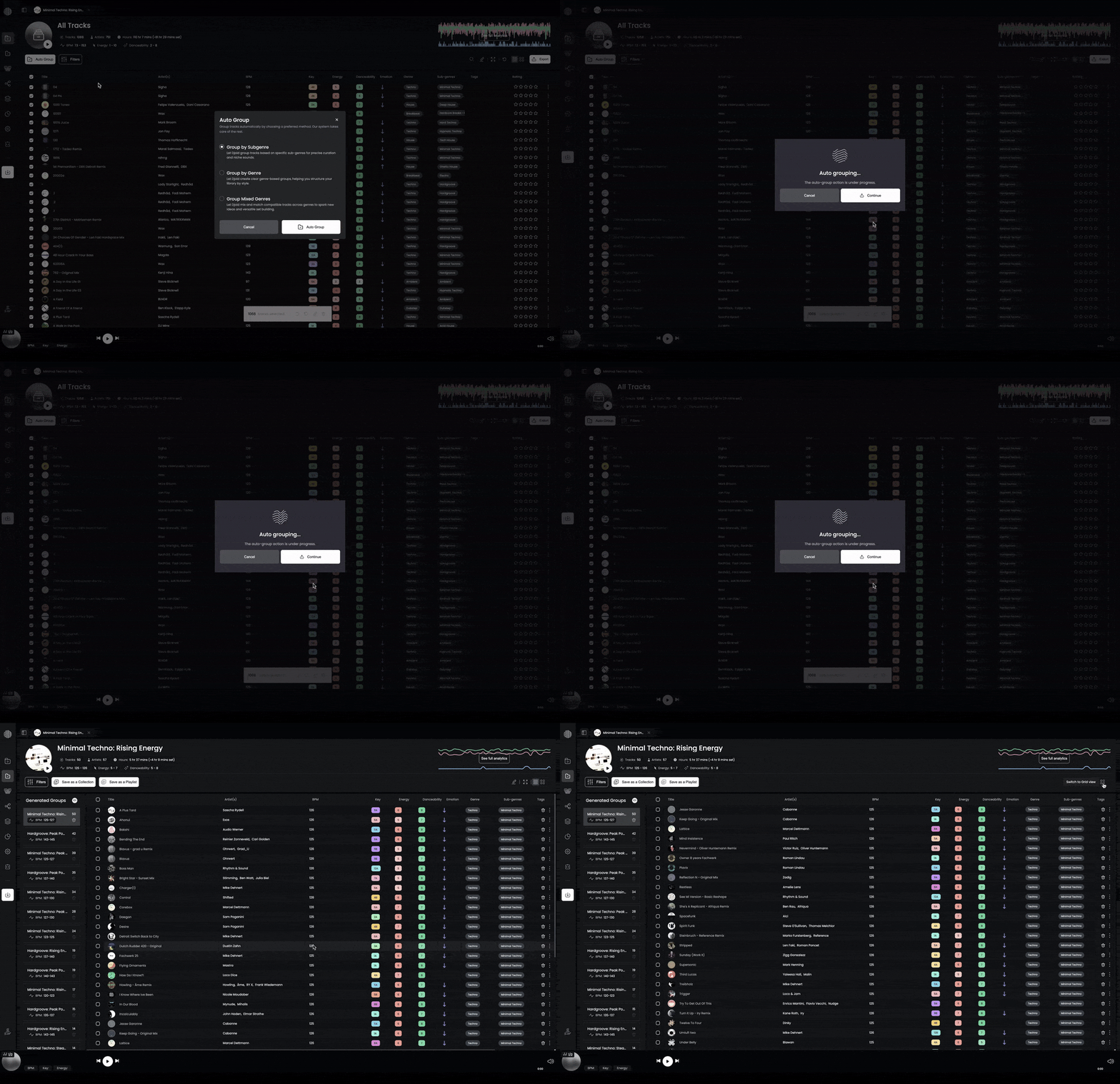
No more off-Djoid manual digging. Import all your tracks and leverage the auto-grouping features to get your library into a manageable state immediately.
Deciding what filtering to apply make the groups might be tough if you are a beginner, but we recommend then to start from a wider filtering selection by energy for example, and then build more complex groups. But, here is the critical part: because automated grouping technical tool and not an artist, you must review them always.
Name the groups according to the feeling they evoke, and refine the contents to ensure they actually match your intent.
2) From Order to Intent: Beyond "Winging It"
The transition from an Organized DJ to an Intentional Curator is where the real artistry begins.
An Organized DJ has a clean library, but they often stick to what they know. At times they rely in improvisation often because the experience isn't there yet or they haven't prepared deeply enough.
They 'wing it' sometimes, but the what's truly missing from their setis that it lacks a specific psychological destination. You have to think beyond playing a set, and think about what you want your aduience to feel, and where you'll be taking them.
The Intentional Curator moves past this by making better, more purposeful selections. It’s no longer about playing "good tracks" that fit the BPM for example; it’s about choosing the only track that fits the atmosphere you are trying to build. You stop reacting to the floor and start designing it.
If you already have Djoid: Use the platform to move beyond the technical "what" of a track. Instead of just looking at BPM or Key, use the grouping interface to cluster music by its impact. If you find yourself improvising because you aren't sure where to go next, it’s a sign your groups are too broad, or you aren’t prepping for the setting or specific sections or your set (example, having a warm up, or cool down always ready). Refine your selections within Djoid so that every group has a clear, intentional role in your sound.
3) The Power of the Chapter
To move from Intentional Curator to Storytelling Artist, you have to master the concept of the Chapter.
A legendary set isn't a continuous two-hour line; it’s a collection of 15 to 20-minute arcs. Without chapters, even the most intentional sets can feel aimless or exhausting/boring for the crowd.
Think of moments where the DJ has held the audience at crazy peak for too long, that there’s no more room to go even higher, the impact of the high-energy has been diminished and is no longer enjoyable for the audience. The Storyteller understands that they are architecting a journey with peaks, valleys, and resets. This is the stage where you stop thinking about the "next song" and start thinking about the next narrative shift. Some sample chapters include the intro, the climb, and the peak.
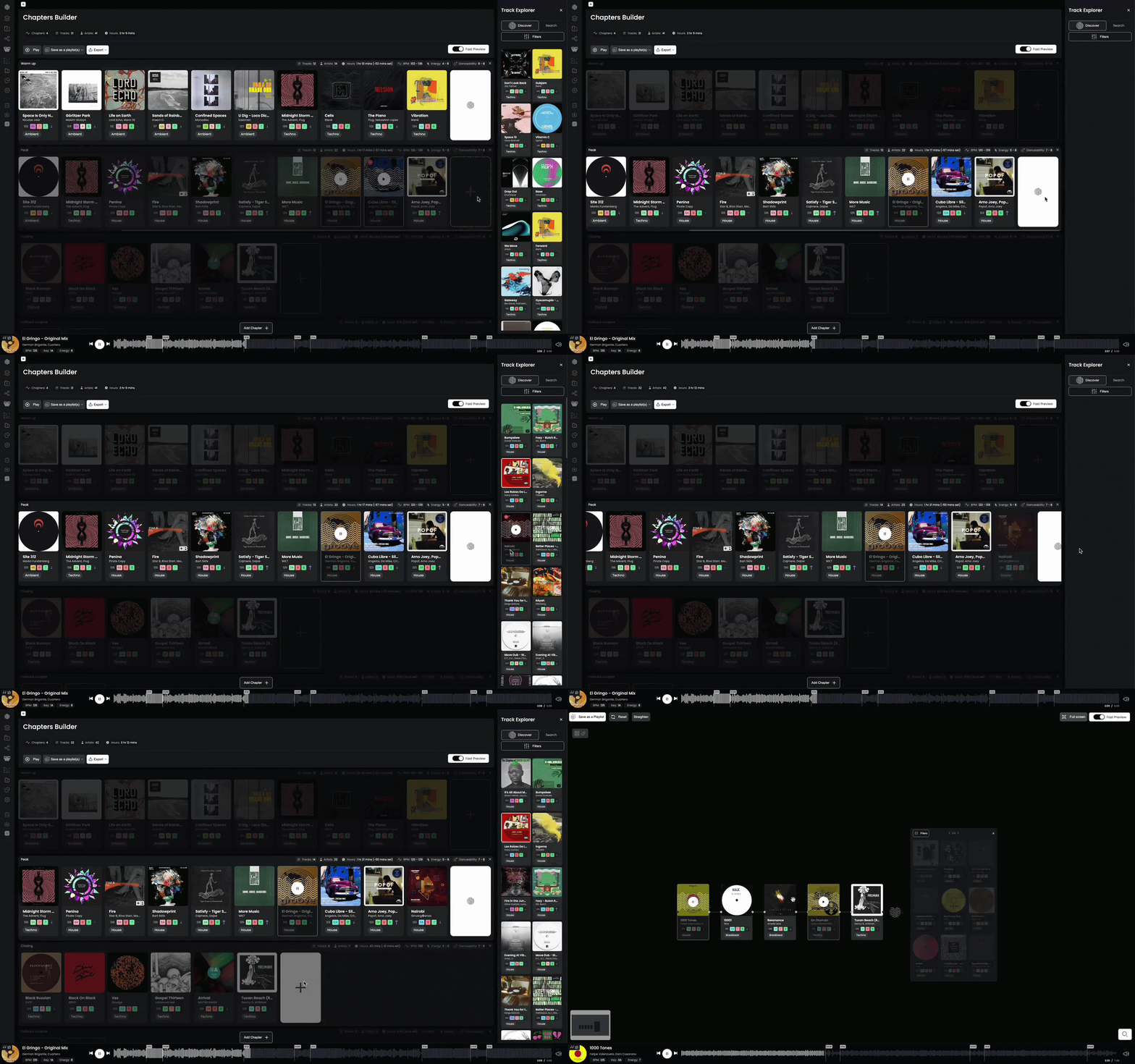
If you already have Djoid: This is exactly why the Chapter Builder exists. Before your next gig, don't just pick a list of tracks; group them into distinct narrative arcs, and make these narrative arcs as rich as need be. You could have “Dark rising” or a “melodic cool down” It is up to your creativity to leverage the chapter builder to create these dinstict emotions within your DJ set.
By visualizing these chapters in the platform, you can see if your story has a logical flow before you even hit the booth. It moves you from a "Flat List" mentality to a narrative-driven workflow.
4) Achieving the Signature: The Sound of Repetitive Mastery
The final leap is from Storytelling Artist to Signature Artist. This happens when you have mastered the art of storytelling through music so consistently that your sound becomes recognizable.
It is the result of repetitive, intentional storytelling over years of performances. At this level, you aren't just telling a story; you are telling your story. Your sound identity is so established that the audience knows it’s you within three tracks, regardless of the genre you’re playing. You have reached artistic maturity.
Besides the skill aspect, you have to be out there playing consistently with the goal of cultivating an audience, and maintaining connections with venues and trying to consistently outplay your previous performance. The hustle culture does play a role in becoming a signature artists, but its a game you have to play.
If you already have Djoid: Your platform is no longer just a prep tool, it is your reative Operating System. Use Djoid to maintain the consistency of your sound identity. Leverage every tool at your disposition to further refine what you already know.
To conclude:
The first step to getting better at anything is recognizing what isn’t working.
Most DJs hit a plateau because they are trying to reach the next level of artistry using the same basic tools and habits that got them through their first year. You can’t build a legacy while you’re still fighting a messy library or relying on generic folder structures that don't reflect how you actually want to play.
Moving up the ladder requires you to stop being a passive manager of your files. If you find yourself constantly "winging it" or struggling to find the right energy in the booth, the problem isn't necessarily your taste (although for some it might be!) it’s the infrastructure you’ve built around it.
To reach the higher rungs, you have to work hard at refining how you prepare for your performances. Scaling this ladder is a long-term refinement of your identity, as a DJ and a human
So, where in the ladder are you right now, and where do you want to be?