Buying second-hand DJ equipment has become one of the most popular ways to upgrade a DJ setup. For professional DJs, club owners, and home enthusiasts alike, purchasing used DJ gear or refurbished DJ equipment can be a smart, cost-effective, and sustainable choice, if done correctly.
Why More DJs Are Buying Second-Hand DJ Equipment
The market for used and refurbished DJ equipment is growing rapidly, and for good reason.
New DJ Equipment Stock Shortages
Several global factors have combined to create a “perfect storm” in the DJ equipment market. The COVID-19 pandemic had a major impact on global supply chains: factories closed or operated at reduced capacity, particularly in Asia, where most electronic hardware is manufactured. At the same time, shipping costs increased dramatically and delivery times became significantly longer, and kind of remain so today.
In addition, inflation has driven up the cost of raw materials and labor year after year, while demand for DJ equipment has continued to grow since the end of the pandemic.
Since 2020, the global semiconductor microchip shortage, essential for manufacturing DJ gear, has further limited production. Geopolitical factors such as the war in Ukraine have only worsened the situation.
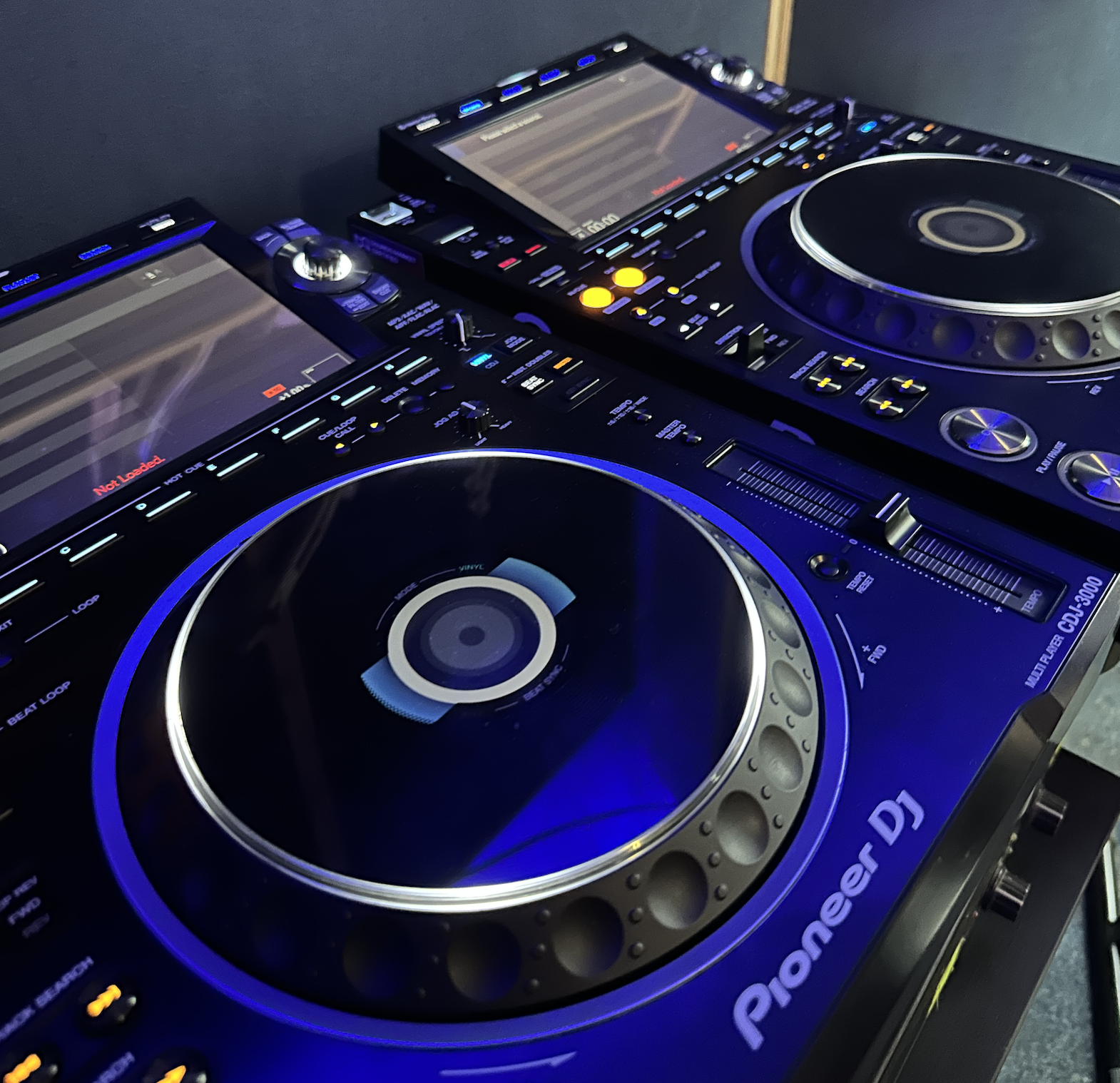
As a result, limited production combined with increasing demand has led to shortages of new DJ equipment and long waiting lists. In some cases, DJs have had to wait several months to purchase flagship products like the Pioneer CDJ-3000.
Rising Prices of New DJ Equipment
Higher demand and increased production costs have pushed prices up across the industry. Additionally, Pioneer DJ (now AlphaTheta) has reached a near-monopoly position in the professional DJ market, giving it greater pricing power.
A decade ago, a professional DJ setup (2x CDJ-2000NXS2 + DJM-900NXS2) cost approximately €6,000–€7,000 new. Today, the current standard (2x CDJ-3000X + DJM-V10) costs over €8,000.
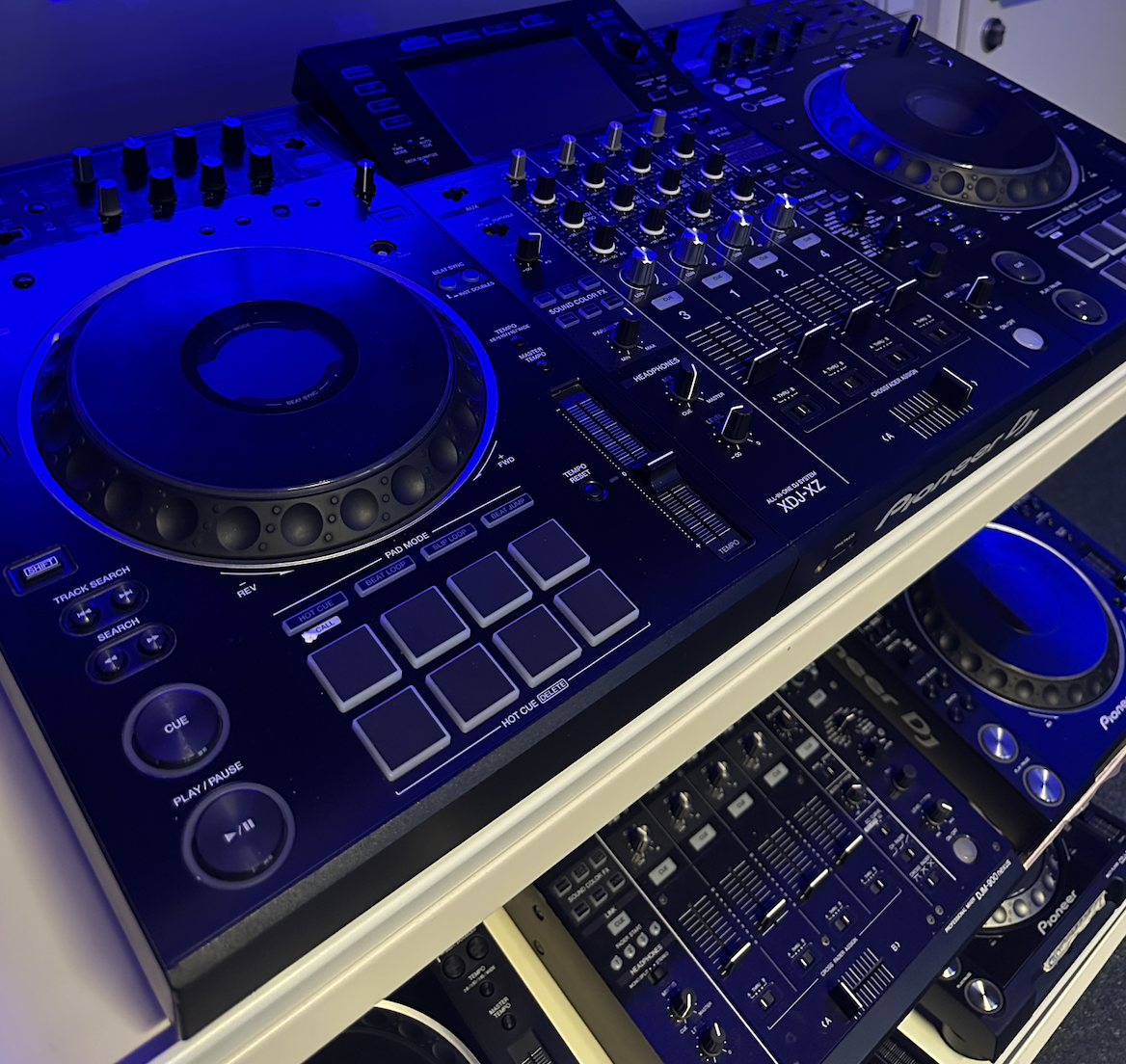
The same trend can be seen with high-end DJ controllers. The XDJ-XZ launched in 2019 at around €2,500, while its successor, the XDJ-AZ, entered the market priced above €3,000.
Sustainability and the Circular Economy in DJ Gear
Sustainability is another major reason why DJs are choosing second-hand and refurbished DJ equipment. Younger generations are increasingly aware of the environmental impact of electronic waste and carbon emissions.
Extending the life of existing DJ gear through the circular economy helps reduce waste and emissions. According to Business Research Insights, sales of new technology products grow at around 3% annually, while refurbished technology sales grow between 10% and 13% per year, three times faster.
This makes buying used DJ equipment not only a more affordable option, but also a more responsible one.
And do all DJs really need the latest model with every new technological feature? Most don’t. Many professionals are perfectly satisfied using a CDJ-2000NXS2 instead of a CDJ-3000X, or an XDJ-RX2 instead of an XDJ-RX3, models that are only available on the second-hand market and at significantly better prices. Why? Because once the new version is launched, the previous one is discontinued.
Is Buying Second-Hand DJ Equipment Safe and Reliable?
Buying second-hand DJ equipment online offers access to discontinued models that remain highly sought-after and fully functional. It is also cheaper and more sustainable. However, there are important risks to consider.
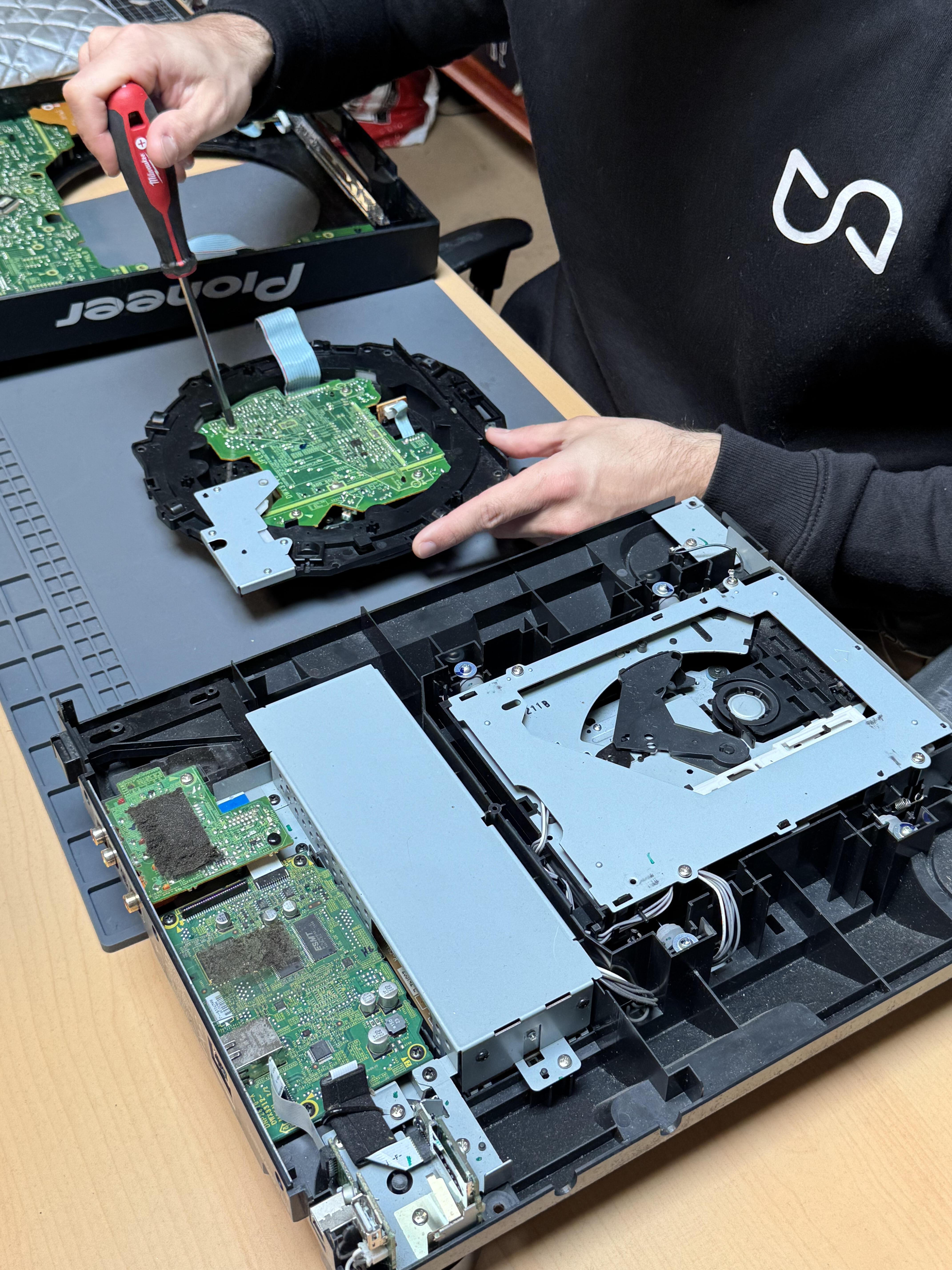
DJ equipment is expensive and fragile. In fact, more than half of DJ products sold on peer-to-peer second-hand marketplaces have some kind of technical issue and require repair. These repairs can be costly and time-consuming, especially if original spare parts are needed, which may take months to source.
Additionally, many online marketplaces lack secure payment and shipping systems, increasing the risk of scams and fraudulent listings.
The Best Way to Buy Second-Hand DJ Equipment
The safest way to buy used DJ gear is to purchase professionally refurbished DJ equipment from trusted sellers who inspect, test, and certify every product.
Sounds Market specializes in refurbishing professional DJ equipment and selling it online across Europe. All products are thoroughly tested and come with a one-year warranty. Sounds Market also operates two physical showrooms (the main one in Barcelona, and a private one in Berlin) where DJs can test and purchase equipment in person.
Additionally, at Sounds Market you can upgrade your gear through a trade-in program: you can use your current equipment as part of the payment toward a higher-end model.
In addition to selling refurbished DJ gear, Sounds Market hosts a large online marketplace with tens of thousands of registered users across Europe, offering a wide selection of second-hand DJ equipment, and securing every payment and shipment between users to prevent fraud and scams.
%20(1).jpg)
Conclusion: Is Second-Hand DJ Equipment Worth It?
Today, buying second-hand DJ equipment is no longer a niche option, it is the better alternative. Choosing used gear for its lower price, environmental benefits, and wider availability
However, choosing the right seller is crucial. Always buy from professional vendors who can certify the condition of the equipment and offer a warranty. Otherwise, you risk spending thousands of euros on DJ gear that performs poorly, requires expensive repairs, or, worst case, has irreparable damage such as a faulty mainboard.
If you buy smart, refurbished DJ equipment can offer outstanding value, reliability, and sustainability.