
Harmonic mixing changed how a generation of DJs approached their sets. The Camelot Wheel, popularized by Mixed In Key, gave DJs a visual framework for compatible keys, a map of which tracks could be mixed together without creating clashing frequencies or tonal dissonance.
The result was technically smoother sets, fewer jarring moments and better transitions. Harmonic mixing is a genuine improvement over playing in key by ear alone. But, somewhere along the way, harmonic mixing became confused with good set building.
DJs started building entire sets around the Camelot Wheel: chaining keys in sequence, staying within compatible zones, optimizing for harmonic coherence above everything else. The problem: some of the most powerful moments in DJ history are harmonically "wrong." And some of the most technically harmonic sets in the world are forgettable.
What Harmonic Mixing Gets Right
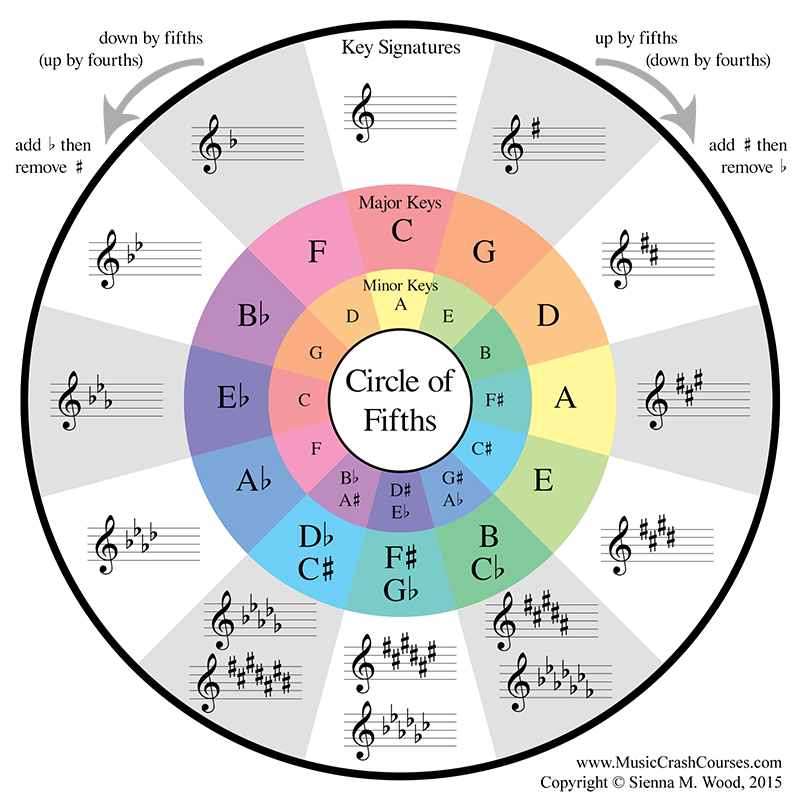
Harmonic mixing solves a real problem: clashing frequencies during a transition are audibly unpleasant — they create a sense of dissonance that pulls people out of the music and back into their heads.
In a long set where you're maintaining a hypnotic state in the room, that disruption is expensive .The Camelot system works by mapping musical keys to numbers and letters (1A through 12B) where adjacent keys on the wheel are harmonically compatible. If you're playing a track in 8A, moving to 7A, 9A, or 8B will sound musically coherent. Moving to 2A might not. For blended transitions — where two tracks are playing simultaneously for 30 seconds or more — harmonic compatibility significantly improves the sound quality of the mix. This is the core value.
If you'd like to read more about harmonic mixing, you can read our article here.
Where Harmonic Mixing Gets Misapplied
The Camelot Wheel is a tool for transitions. It was never designed to be a set-building system. When DJs use harmonic compatibility as the primary criterion for track selection — "what's in 8A that I can play next?" — they're optimizing for the 30-second transition window at the expense of the 10-minute track choice. When they should be prioritizing: the energy of a track, the emotional feel, the way it accelerates or decelerates the arc of the set. The textural difference from the previous track that creates necessary contrast.
None of these appear on the Camelot Wheel. A set built purely by Camelot navigation tends to feel directionless — technically smooth, but without momentum. You're moving across the wheel but not going anywhere.
Another problem is that harmonic key detection is not always accurate. Most key detection algorithms — including the one in Rekordbox and the one in Mixed In Key — are wrong on 10–20% of tracks, particularly in niche genres, tracks with complex chord progressions, or tracks where the dominant frequency isn't the root note. Building a rigid system on inaccurate data produces rigid mistakes.
Energy is where your focus should be at.
If you had to choose one axis to optimize your track selection — and you don't, but if you did — energy matters way more than key.
Here's why:
1) Energy determines the feeling in the room: A drop in energy at the wrong moment loses the floor. A spike in energy at the right moment builds it. The arc of energy over the course of a set is the emotional shape of the experience — the rising tension, the release, the resolution.
2) Key affects the quality of a transition: It's important, and worth attending to. But a clashing key in a short, hard transition is barely noticeable. A clashing energy — a heavy, dark track dropped immediately after an airy, melodic one without the room being ready — is very noticeable.
The DJs who move rooms reliably are primarily energy managers. They know intuitively when the room can handle an escalation and when it needs to breathe. They know how to build anticipation and how to release it. They track the emotional state of the crowd and make decisions based on it. Most of this work happens before the gig, in the design of the set. The key compatibility is a secondary refinement on top of it.

The Right Way to Use Harmonic Mixing
Harmonic mixing is most valuable when it's applied as a filter within energy constraints, not as the organizing principle.A practical workflow:
1. Design the energy arc first: This may involve asking yourself; what's the shape of the set? Where does it peak? What's the opening energy? What's the resolution? Select tracks that serve these roles.
2. Group by energy within each phase: Your openers are in a certain energy range. Your builders are in another. Your peak time tracks are in another. Within each group, find the tracks that do the specific emotional job you need.
3. Use Camelot/harmonic compatibility as a refinement within energy groups: Among the tracks that have the right energy for this moment, which ones are harmonically compatible? Pick from those.
4. Be willing to break harmonic compatibility for emotional purpose: A key clash in a cut transition is barely audible. A perfectly harmonic transition that serves the wrong emotional moment is a bigger problem. Prioritize emotion.
Also, keep texture in mind
There's a third dimension that most discussions of track selection ignore: texture. Texture is how a track feels in the body rather than the ears: density, weight, space, warmth or coldness
A track with a lot of high-frequency energy feels different from one with a lot of low-end weight, even at the same energy level and in compatible keys. Contrast in texture can create the sense of movement and development in a set. If every track has the same density, the same weight, the same amount of space, the set feels static even if the energy is building.
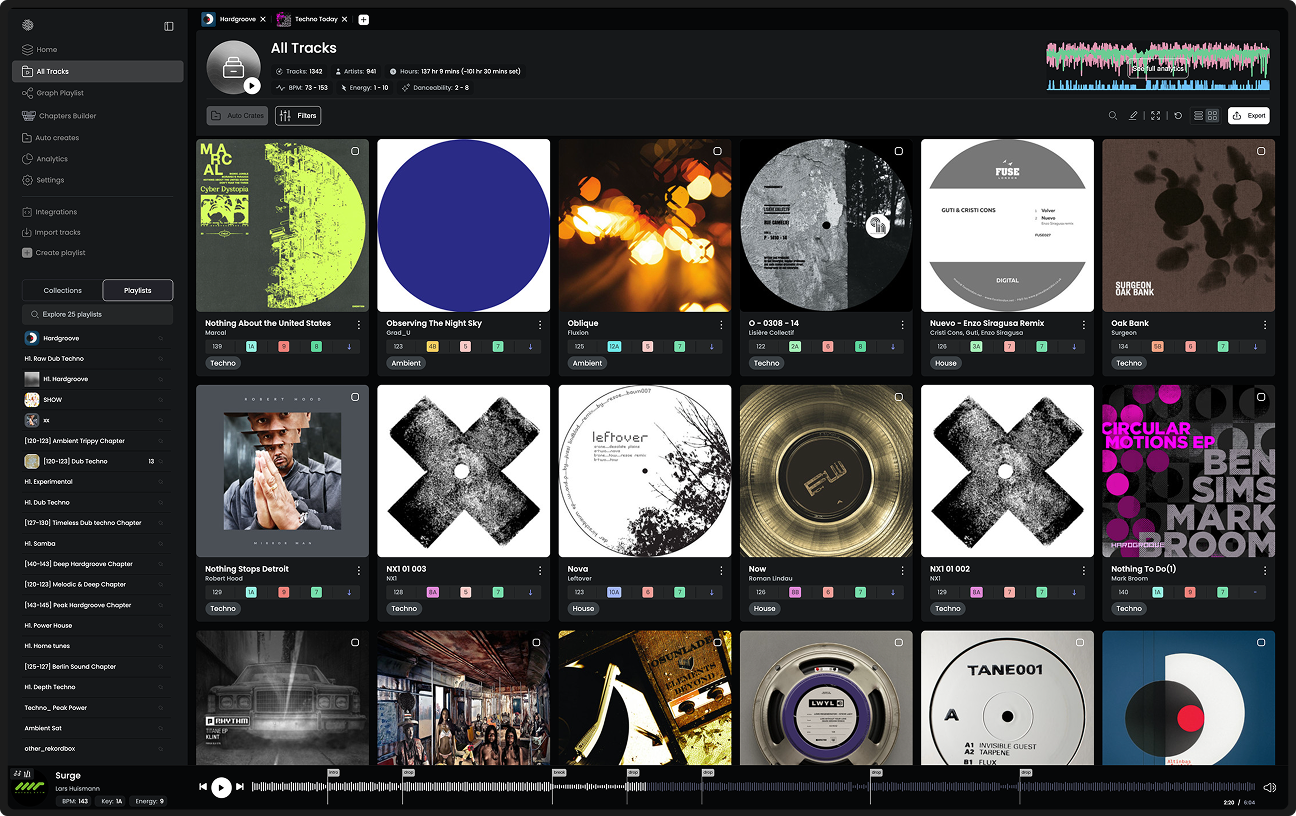
Texture is best identified from listening. But audio analysis tools — particularly ones that cluster tracks by sonic characteristics — can approximate it. When Djoid's Auto Group clusters your tracks, it's partly capturing textural similarity. Tracks in the same cluster tend to share textural characteristics. Building a set that draws from two or three clusters — rather than one — tends to produce more textural variety and a more engaging emotional arc.
A Framework for Better Track Selection beyond Key
We recommend that when you're deciding what to play next, it is helpful to run through these questions in order:
1. Where are you guidin the room's energy? Do you want to build, maintain, drop, or peak? Select your next track based on energy first.
2. What texture does this moment need? For example, after a dense, compressed track, do you need space? After something bright and melodic, does this moment want something darker and heavier?
3. Are there harmonically compatible options within the candidates from steps 1 and 2? If yes, prefer those. If not, consider the transition technique — a short cut makes key clashing almost inaudible.
4. What's the emotional quality of this moment? Is it euphoric, hypnotic, dark, hopeful? Does the track you're considering match or productively contrast with that quality?
Conclusion
Harmonic mixing is a good tool, but it is not the most important variable you should be looking at when creating your DJ set.
What truly important is: your understanding on how to seamleslly shape a journey for your audience thorugh energy, emotion and motion — and that's built through preparation, design, your taste and accumulated experience.